
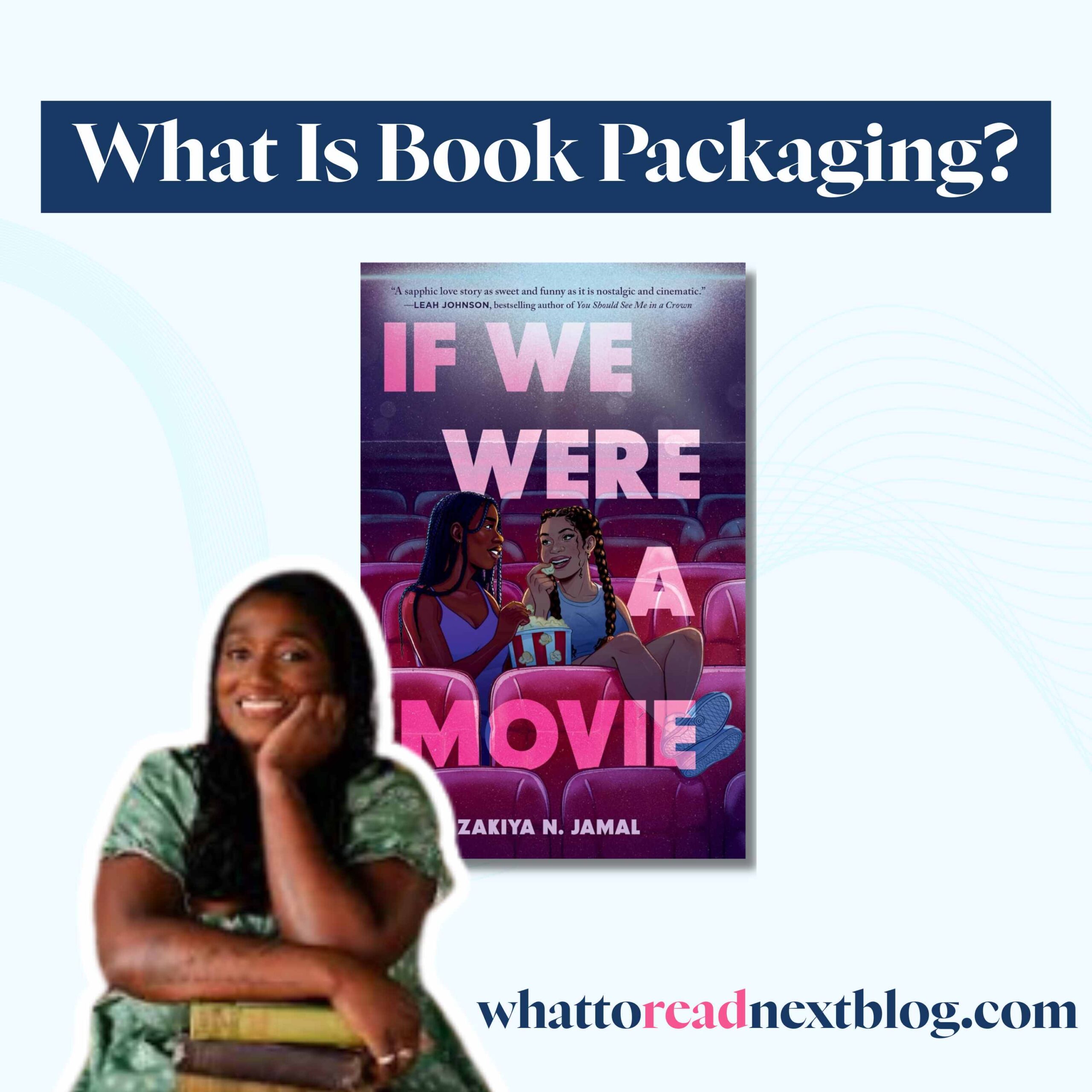
What Is Book Packaging? Inside the Publishing Model Behind If We Were a Movie
Disclosure: We are part of the Amazon Affiliate, LTK Creator, Shopmy programs. We will receive a small commission at no cost if you purchase a book. This post may contain links to purchase books & you can read our affiliate disclosure here.
If you grew up reading series like The Babysitters Club or Sweet Valley High, you’ve already encountered book packaging — even if you didn’t know the term.
In a recent episode of What to Read Next, author Zakiya N. Jamal shared her firsthand experience writing a packaged YA romcom, If We Were a Movie. Her story offers a rare, clear look at how book packaging actually works today — and why it’s still a legitimate, creative path into publishing.
This conversation reminded me how many assumptions we make about how books come into the world — and how much nuance gets lost when we flatten publishing into “traditional vs self-published.”
Listen to Our Podcast Episode
So… What Is Book Packaging?
At its core, book packaging is a publishing model where a company develops a book concept and then hires a writer to bring it to life.
The packager may:
- Develop the initial idea or logline
- Identify a target audience or market
- Pair the project with the right writer
- Help assemble a proposal for publishers
Once the book sells, it typically moves forward much like a traditionally published book — with editing, marketing, and distribution handled by a publishing house.
For readers, the finished book looks no different on the shelf. For writers, the path to getting there can look very different.
How Zakiya N. Jamal Entered the Book Packaging World
Zakiya didn’t seek out book packaging as a strategy — it found her through a professional connection. Before she had an agent, she was invited to audition for a packaged project by submitting a writing sample.
That’s an important detail. Book packaging isn’t about anonymous outsourcing. It’s often about identifying writers with strong voices and pairing them with concepts that fit.
After being selected, she was presented with several potential ideas. One of them eventually became If We Were a Movie.
From Concept to Creative Ownership
This is where many misconceptions fall apart.
While the original idea came from the packager, Zakiya had significant creative freedom once she came on board. She reshaped the story in ways that made it personal and authentic:
- She made the romance sapphic
- She set the story on Long Island, where she grew up
- She developed the characters, voice, and emotional arc
Rather than feeling constrained, the framework gave her a starting point — and the space to build something that felt like hers.
Book packaging doesn’t mean writing without a voice. When it works well, it’s about collaboration.
Writing the First Third (and Selling the Book)
Another key part of Zakiya’s experience was writing only the first portion of the book before it sold.
She drafted roughly the first third, revising closely with editorial feedback. That partial manuscript, along with a detailed outline for the rest of the story, became the proposal that went out to publishers.
This model lowers the barrier for newer writers. You don’t need a full manuscript upfront — but you do need a strong voice and a clear sense of where the story is going.
Once the book sold, the process became much more familiar: revisions, deadlines, and the traditional publishing pipeline.
Book Packaging vs Traditional Publishing
It’s tempting to frame publishing paths as a hierarchy. Zakiya’s experience challenges that.
Here’s what stood out to me:
Book Packaging Can Offer:
- A faster path to publication
- Mentorship and editorial guidance
- Entry into publishing before landing an agent
- A collaborative creative environment
Traditional Submissions Often Offer:
- Full control over concept from day one
- A longer timeline
- More uncertainty upfront
Neither path is “better.” They simply serve different writers at different stages.
Why Book Packaging Still Matters Today
Book packaging has evolved — and it’s doing important work behind the scenes.
It can:
- Create opportunities for new and marginalized voices
- Lower the entry barrier to publishing
- Keep series and genre fiction thriving
- Match strong writers with market-savvy concepts
For readers, it means more books that feel polished, intentional, and emotionally resonant.
For writers, it can be a stepping stone — or a fulfilling career path in its own right.
Who Might Consider Book Packaging?
Based on Zakiya’s experience, book packaging can be a great fit for writers who:
- Enjoy collaboration
- Are flexible within a framework
- Want industry experience early
- Are curious about publishing beyond the traditional route
It’s not about giving up creative identity. It’s about choosing the right lane for where you are right now.
🎧 Want more behind-the-scenes publishing conversations?
Subscribe to What to Read Next for book recommendations, industry insights, and cozy ways to stay curious about reading.
Subscribe to
the Newsletter
Subscribe to our newsletter and get handpicked book recommendations, the best deals on reading on a budget and exclusive reading tips right in your inbox.
Why I Loved This Conversation
What I appreciated most about talking with Zakiya was how transparent she was about the process — without judgment or hype.
Book packaging isn’t a secret shortcut. It’s one of many real ways books get made. And the more we talk about it openly, the better equipped readers and writers are to understand the industry we love.
Related Posts
- Book Blogging Tips: How to get ARCs?
- Discover PangoBooks: Your Go-To Marketplace for Books
- Looking for the Anti-Algorithm Goodreads Alternative? Check out Pagebound